
Among Sensex components, shares of Reliance Industries, India's largest company by market value, stole the show by surging 1.61 per cent to their highest in over three months.

Fitch Ratings on Tuesday affirmed India's sovereign credit rating at 'BBB-' with a stable outlook, saying the rating derives strengths from the country's robust growth outlook and still-resilient external finances. It said India's robust medium-term growth outlook is a key supporting factor for the rating. A clear improvement in corporate and bank balance sheets, which were under strain prior to the pandemic, is likely to facilitate a steady acceleration in investment in the coming years.

"Have just got the good news that due to the hard work of our teams and your cooperation, a consensus has been reached on New Delhi G20 Leaders Summit Declaration," Modi said while addressing the second session of the Summit at the Bharat Mandapam in New Delhi.

Tata Steel was the biggest gainer in the Sensex chart, rising 2.39 per cent, followed by Tata Motors, Power Grid, Reliance Industries, UltraTech Cement, NTPC, Nestle, HUL, Mahindra & Mahindra, Wipro, Kotak Mahindra Bank and Asian Paints. In contrast, Bajaj Finance, IndusInd Bank, Axis Bank, Bharti Airtel, Bajaj Finserv, ICICI Bank, Infosys and Titan were among the laggards.

For the first time, the country's largest airline IndiGo will soon lease up to four wide-body Boeing 777 planes to cover the shortfall in its international operations, according to officials. The airline said the wet-leasing of "certain aircraft" will be done as an interim measure. IndiGo, which has so far only been operating narrow-body Airbus planes, ATRs and freighters, will now be having wide-body aircraft in its fleet.

Chinese Foreign Minister Qin Gang will travel to India to attend the meeting of G20 foreign ministers on March 2, during which he is expected to hold his first bilateral meeting with External Affairs Minister S Jaishankar.

Rebalance your portfolio in case it has become overweight on equities vis-a-vis your strategic asset allocation.


Chinese foreign ministry spokesperson Mao Ning said China believes that state-to-state interactions should be in line with the trend of the time which is peace and development rather than exclusivity.
'Limited spillovers' to Asia's third-largest economy, even as world 'perilously close' to recession.

'The deal pipeline across products is robust for 2024.'

Reliance Industries may report a muted performance for the April-June quarter of FY24, with most brokerages expecting it to have witnessed a year-on-year (YoY) and quarter-on-quarter (QoQ) contraction in revenue and net profit during the period because of a poor showing by its oil-to-chemicals (O2C) division. The O2C division, which includes refining and petrochemical businesses, accounts for a little over half of RIL's revenue and profit. A muted showing by RIL in the first quarter of 2023-24 may weigh on the overall corporate earnings, as well as the equity markets.

Fitch Ratings on Friday said it has revised the outlook on India's sovereign rating to 'stable' from 'negative' as downside risks to medium-term growth have diminished on rapid economic recovery. Fitch Ratings kept the rating unchanged at 'BBB-'.

Traders said fresh buying by stockists for the ongoing marriage season mainly led to a recovery in gold and silver prices.

World Bank President Jim Yong Kim, who is on a three-day visit to India, said a projected five per cent GDP growth in the current financial year was disappointing, but future prospects for the country were good.

The 12th Plan document has already been approved by the full Planning Commission chaired by Prime Minister Manmohan Singh on September 15.


The impact of the banking crisis in the US was visible in IT bellwether Tata Consultancy Services' (TCS) weak performance in the March quarter of fiscal 2023 (Q4FY23). The firm witnessed slower revenue growth in Q4FY23 and failed to meet its FY23 exit Ebit margin of 25 per cent as some clients, especially in the North American region, took to pausing projects and rising onsite costs offset utilisation gains. Sequentially, the company's revenue grew by just 0.6 per cent on a constant currency basis, which was one of the slowest paces in over 11 quarters.
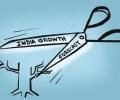
The International Monetary Fund (IMF) on Tuesday lowered India's economic growth projection for the current fiscal to 5.9 per cent from 6.1 per cent earlier. Yet India will continue to be the fastest-growing economy in the world. In its annual World Economic Outlook, IMF also lowered the forecast for 2024-25 fiscal (April 2024 to March 2025) to 6.3 per cent from the 6.8 per cent it had predicted in January this year. The growth rate of 5.9 per cent in the 2023-24 fiscal compares to an estimated 6.8 per cent in the previous year.


Benchmark indices advanced for the second straight session on Tuesday, with the Sensex and Nifty jumping nearly 2 per cent each, mirroring a rally in global equity markets. Buying in index majors Reliance Industries and IT stocks buoyed the benchmarks. The BSE Sensex zoomed 934.23 points or 1.81 per cent to settle at 52,532.07. During the day, it rallied 1,201.56 points or 2.32 per cent to 52,799.40. The NSE Nifty climbed 288.65 points or 1.88 per cent to finish at 15,638.80.

Investors' wealth on Tuesday jumped by over Rs 2.51 lakh crore, in tandem with a sharp recovery in equities after four days of heavy declines. The 30-share BSE Sensex opened on a weak note and tumbled 581.93 points or 1.10 per cent to 52,260.82 during the day amid firming oil prices and relentless selling by foreign institutional investors. Amid bouts of volatility, the benchmark touched a high of 53,484.26 and a low of 52,260.82 during the trade. It finally settled at 53,424.09, higher by 581.34 points or 1.10 per cent.

The higher than expected growth in the second quarter of 2013-14 is an indication of recovery in economy but some key sectors still need to perform better, India Inc said on Friday.

Investors are showing some interest in the downstream energy cycle. Refiners and marketers, especially the public sector (PSU) oil marketing companies (OMCs) could see a revival of marketing margins. Lower crude oil and gas prices may also improve margins in industries like paints, logistics, synthetic fabrics, plastics, and fertilisers. In the medium-term, however, there could be a supply overhang affecting OMCs as new refining capacities are scheduled to be commissioned, especially in China, and this may lead to a drop in the refining margins as capacity would be surplus to demand until and unless there's a pick-up in global growth.

This comes at a time when the global recovery remains fragile and is expected to slow later this year as the impact of the fiscal stimulus measures wanes.

India's trade account could come under pressure and there could be an inflation push if crude oil prices remain above the $90 per barrel (Brent) for a prolonged period since India imports over 85 per cent of its oil and roughly 50 per cent of its gas. A rebound in economic activity is bound to lead to higher fuel demand. While India is the third-largest importer of crude, it is a net exporter of refined products, which helps to compensate to some degree.

The combined market-cap of all listed Adani group firms has plunged nearly Rs 7.11 trillion since January 24 when the Hindenburg report was made public.

'In India, a deadly wave of infection with the Delta variant stole 240,000 lives between April and June and disrupted economic recovery. Similar episodes could take place in the near term,' said the report.

Foreign Portfolio Investors (FPIs) have pumped Rs 47,148 crore in the Indian equities in June, making it the highest inflow in 10 months, enthused by the country's steadily improving macroeconomic fundamentals. However, inflows in July may be subdued as FPIs might adopt cautious stance due to the recent comments from the US Federal Reserve, Mayank Mehraa, Smallcase manager and principal partner at financial consultancy Craving Alpha, said. Besides, VK Vijayakumar, Chief Investment Strategist at Geojit Financial Services, said FPIs are likely to turn a bit cautious going forward as valuations in the country are rich from a short-term perspective.

The sharp rally in the broader markets has propelled India's market capitalisation (m-cap) to a new high. The combined m-cap of all BSE-listed firms rose to Rs 291.9 trillion in intraday trade on Thursday before settling lower at Rs 290.9 trillion. The previous record was on December 14, 2022, at Rs 291.3 trillion.

Polarisation in the performance of Indian banks will persist as many large public sector banks are still saddled with weak assets, high credit costs, and poor earnings, S&P Global Ratings said on Thursday. It said State Bank of India and leading private sector banks have largely addressed their asset quality challenges, and their profitability is improving more sharply than the banking system. In its Global Banking Outlook-2023 report, S&P said economic recovery is driving credit costs to cyclical low levels and stronger balance sheets and higher demand should boost bank loan growth, but deposit growth will lag.

The NSE Nifty ended at 5505, lower by 38 points. Market breadth is negative, 1802 stocks are declining for 1122 advancing stocks.
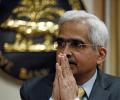
Uncertainty is emerging as the only certainty, said RBI Governor Shaktikanta Das as he emphasised on continued policy support at the December MPC meet during which members expressed concerns over spread of the Omicron variant of coronavirus, as per the minutes of the rate-setting panel released on Wednesday. After three days of deliberations, the six members of the Monetary Policy Committee (MPC) on December 8 unanimously voted for status quo on policy rates for the ninth consecutive time. At the meeting, the RBI Governor said risks stalking the global economy have amplified with rapid spread of the virus mutations, including the Omicron variant, leading to countries scrambling for restrictions.
Equity investors became richer by Rs 5.66 lakh crore as markets bounced back sharply on Tuesday following a recovery in global equities. The 30-share BSE Sensex jumped 1,276.66 points or 2.25 per cent to settle at 58,065.47 points. During the day, it zoomed 1,311.13 points or 2.30 per cent to 58,099.94 points. The market capitalisation of BSE-listed firms climbed Rs 566,318.84 crore to Rs 273,92,739.78 crore.

India's consumer price index (CPI)-based inflation could ease in the coming months thanks to the arrival of kharif crops, lower international commodity prices, and a pass through of lower input costs to consumers, the finance ministry said in its Monthly Economic Review (MER) for October, which was released on Thursday. The MER, however, warned that the global macroeconomic situation remained precarious and a recession in many advanced economies would impact India's exports. "Easing international commodity prices and new Kharif arrival are set to dampen inflationary pressures in the coming months.

Silver, however, remained steady at Rs 37,200 per kg.

The past couple of years have been tough for everyone 'but things are now definitely looking up. There are certain signs of life in the industry,' General Motors Co's North American president Mark Reuss told reporters on the sidelines of the Chicago Auto Show.

World manufacturing expansion slowed to 5.2 per cent in the second quarter of 2011 year-on-year from 7.5 per cent in the first quarter.

The tourism industry expects a short-term impact, as it is counting on the state's proven expertise in managing such crises.

Chinese Premier Premier Li Keqiang said world economic recovery should not be driven by mainly China, but in concert with many countries.
